 vadodara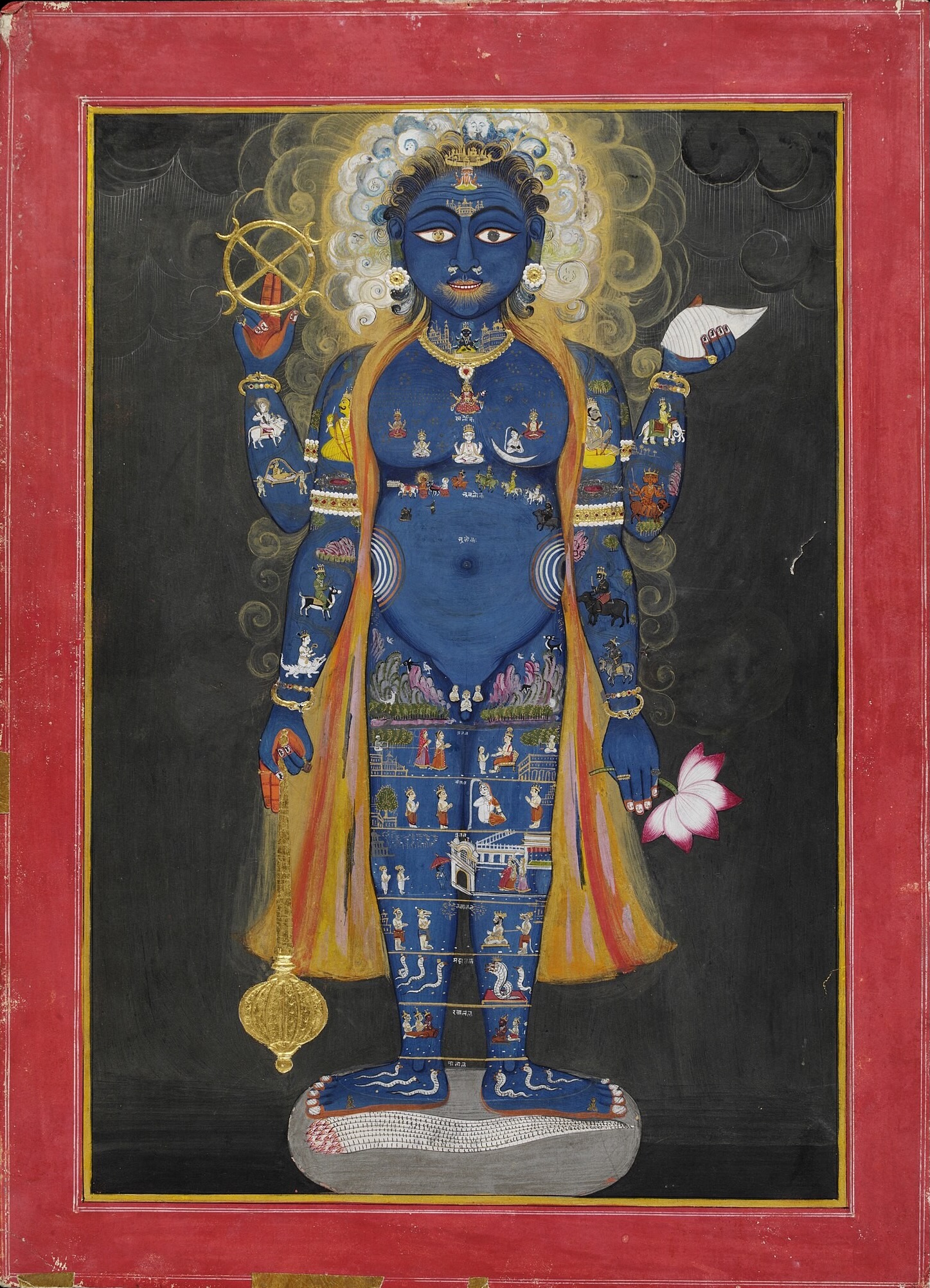
2. All this is verily Brahman. This Ātman is Brahman. This Ātman has four quarters.
Mandukya Upanishad 2
BIBLIOGRAPHY
- Aristotle. De Anima. Translated by R. D. Hicks, Cambridge University Press, 1907.
- There are some, too, who say that soul is interfused through out the universe: which is perhaps why Thales supposed all things to be full of gods. But this view presents some difficulties. For why should the soul not produce an animal, when present in air or fire, and yet do so when present in the compounds of these elements: and that, too, though in the former case it is believed to be purer? One might also enquire why the soul present in air is purer and more immortal than soul in animals (De Anima 410b18-4111a15).
- The Mandukya Upanishad: With Gaudapada’s Kārikā and Śaṅkara’s Commentary. Translated and annotated by Swami Nikhilananda, foreword by V. Subrahmanya Iyer, Sri Ramakrishna Ashrama, 1949.
- Watts, Alan. The Tao of Philosophy: The Edited Transcripts. Tuttle Pub, 2002.
- What is called substance, that which stands underneath—“sub:” underneath; “stance:” stands—to be substantial is to be underlying, to be the support, to be the foundation of the world. And of course, this is the great function of the feminine: to be the substance. And therefore, the feminine is represented by space—which is, of course, black at night. But were it not for black and empty space, there would be no possibility whatsoever of seeing the stars. Stars shine out of space, and astronomers—very high-powered astronomers—are beginning to realize that stars are a function of space.
- “Vishnu Vishvarupa.” ca. 1800–1820, Victoria & Albert Museum, London.