 vadodara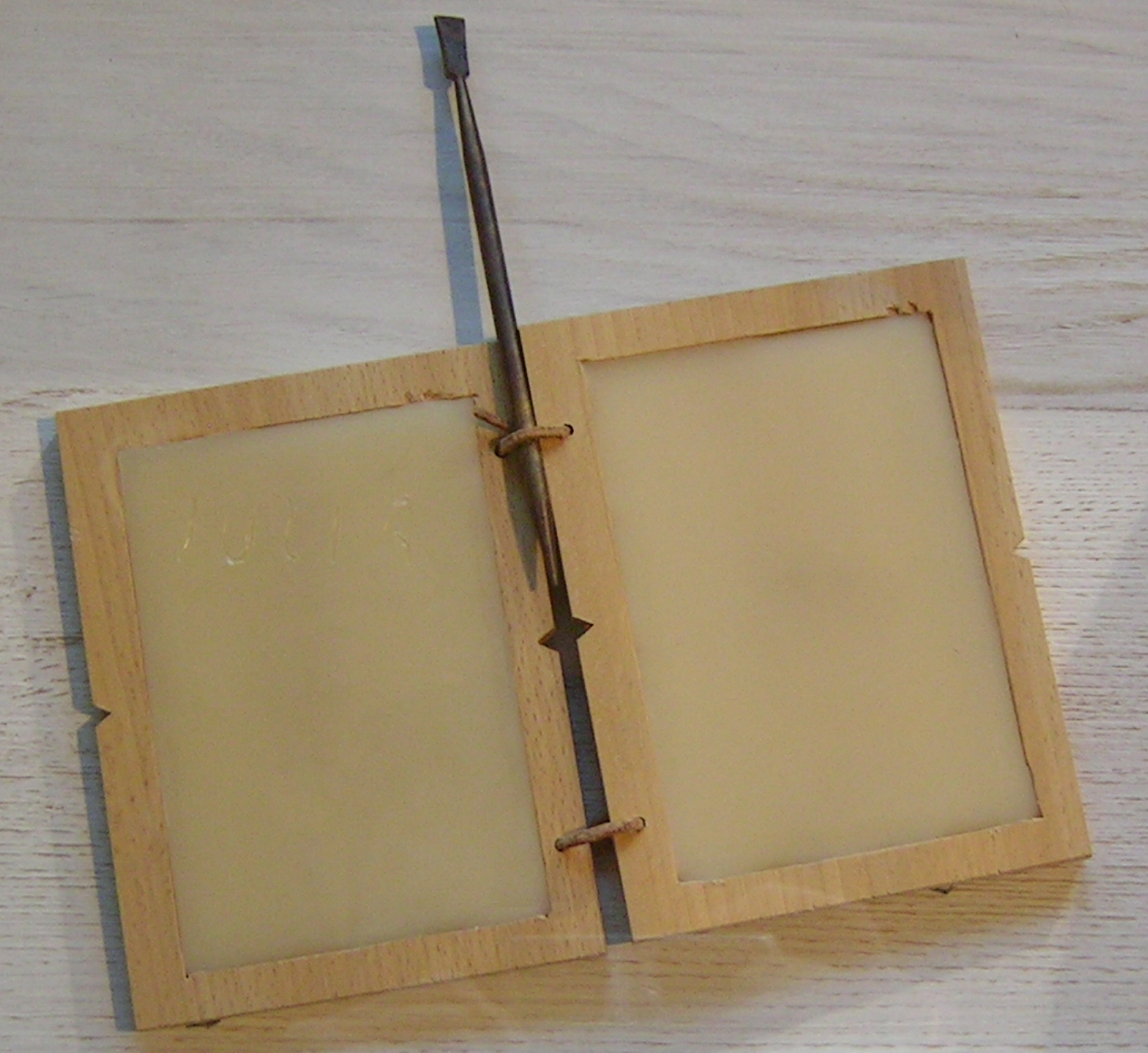
After this I inquired in general into what is essential to the truth and certainty of a proposition ; for since I had discovered one which I knew to be true, I thought that I must likewise be able to discover the ground of this certitude. And as I observed that in the words I think, hence I am, there is nothing at all which gives me assurance of their truth beyond this, that I see very clearly that in order to think it is necessary to exist, I concluded that I might take, as a general rule, the principle, that all the things which we very clearly and distinctly conceive are true, only observing, however, that there is some difficulty in rightly determining the objects which we distinctly conceive.
René Descartes, Discourse on the Method
BIBLIOGRAPHY
- Al‑Ghazālī. The Revival of the Religious Sciences. Vol. 4, “The Revival of the Religious Sciences – Imam Ghazali,” translated by Mohammad Mahdi al-Sharif, Dar Al-Kotob Al-limiyah, 2011.
- Let’s begin with the knowledge which is the foundation. It is called faith in language, for faith in general is to believe in something with the heart, and every kind of trust with the heart is knowledge, and once it is strong, it is called certainty (of faith). There are numerous branches under certainty of faith. We need of them only that on which we could establish reliance, i.e. monotheism, translated by your statement: “There is none worthy of worship except for Allah alone, Who has no partner”, faith in the power which is translated by your statement: “Whose is the dominion”, and faith in munificence and wise which is indicated by your statement: “To Him be all perfect praise”. Whoever then says: “There is none worthy of worship except for Allah Alone Who has no partner, Whose is the dominion and to Whom be all perfect praise, and He has power over all things”, his faith would become perfect, I mean the faith which is the foundation of reliance, or in other words, this statement would become an attribute inherent to his heart (The Revival of the Religious Sciences 373).
- Atma Bodha of Bhagwan Sri Sankarācārya. Translated & published by Swami Chinmayananda, Madras, 1965.
- By the indiscriminate blending of the two—the Existence-Knowledge-aspcet of the Self and the thoughtwave of the intellect—there arises the notion of “ I know (Atamabodha 25).
- The Atman is self-effulgent, and mind is inert matter. Without the power of Illumination in Consciousness the mind would be inert and powerless to feel—for, without this awareness within we will not be conscious of our own thoughts. At the same time a marriage between these two contradictory things is impossible, and, therefore, any alliance between the two is only at best a delusory superimposition.
- The experience ‘ I know ’ is thus produced only when a feeling or thought stands bathed in the Light of Consciousness. Each thought is considered as a wave-like disturbance in the mental-stuff. When these “ waves ” of thoughts arise in us they are illumined by our awareness …. when, we cry ‘I know‘, I understand ‘ I feel etc.
- The sun rises and then the waves of the sea are seen and experienced. The sun-light falls on all surfaces equally. Like a silken veil it lies on every surface and when the waves rise the light-veil yields, embracing the waves on all sides, illumining it. So too in our inner bosom the light-of-consciousness illumines the height, breadth, and depth of each thought (Atma Bodha of Bhagwan Sri Sankarācārya 52).
- By the indiscriminate blending of the two—the Existence-Knowledge-aspcet of the Self and the thoughtwave of the intellect—there arises the notion of “ I know (Atamabodha 25).
- Descartes, René. Discourse on the Method of Rightly Conducting the Reason and Seeking Truth in the Sciences. Translated from the French and collated with the Latin by John Veitch, Dover Publications, 1899.
- After this I inquired in general into what is essential to the truth and certainty of a proposition ; for since I had discovered one which I knew to be true, I thought that I must likewise be able to discover the ground of this certitude. And as I observed that in the words I think, hence I am, there is nothing at all which gives me assurance of their truth beyond this, that I see very clearly that in order to think it is necessary to exist, I concluded that I might take, as a general rule, the principle, that all the things which we very clearly and distinctly conceive are true, only observing, however, that there is some difficulty in rightly determining the objects which we distinctly conceive (Descartes 36).
- “Wachstafel mit Griffel.“ Photographyed by Sippel2707. 2005.