 vadodara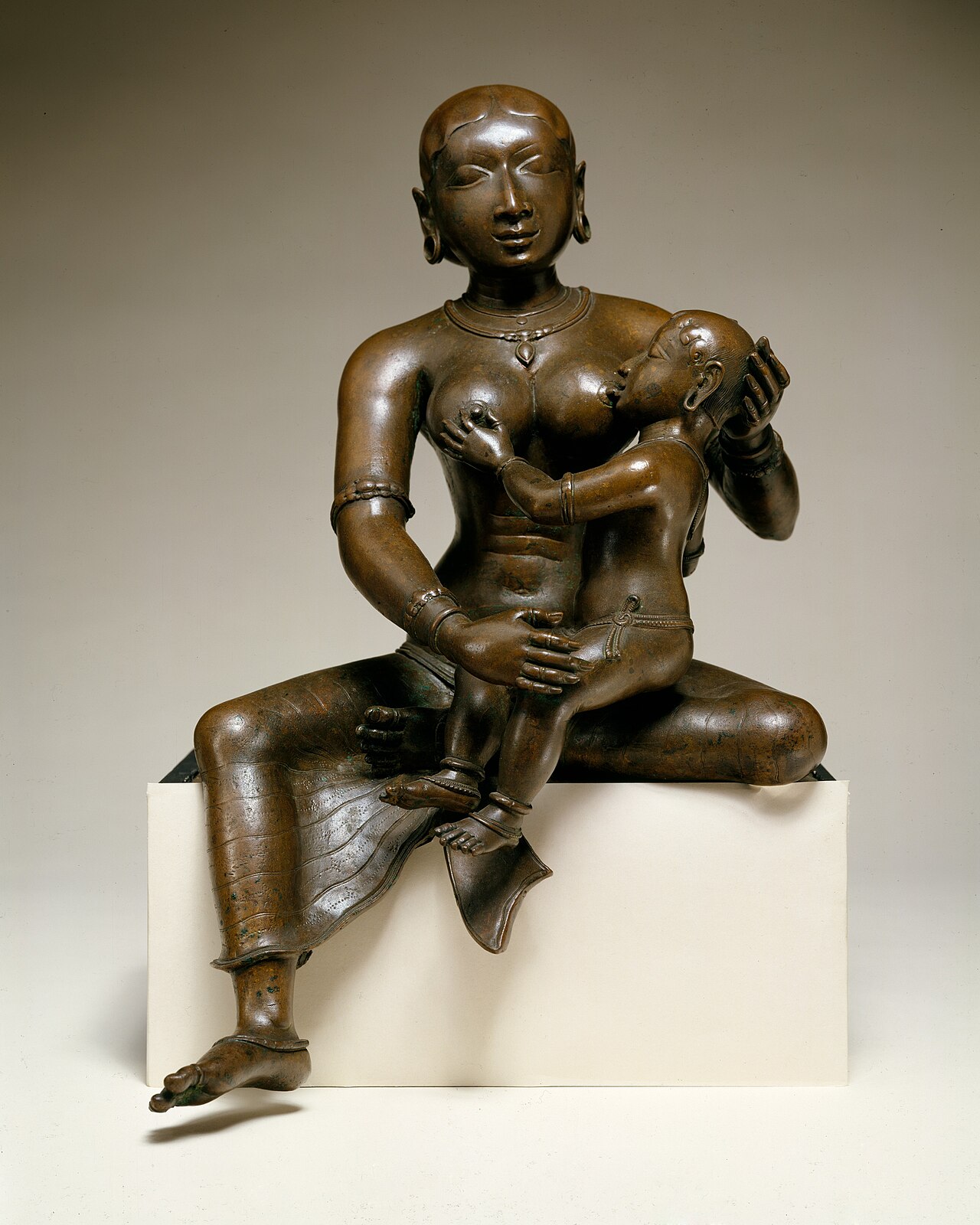
Often the sucking activities of a child are accompanied by a slight nasal murmur, the only phonation which can be produced when the lips are pressed to mother’s breast or to the feeding bottle and the mouth is full. Later, this phonatory reaction to nursing is reproduced as an anticipatory signal at the mere sight of food and finally as a manifestation of a desire to eat, or more generally, as an expression of discontent and impatient longing for missing food or absent nurser, and any ungranted wish.
Roman Jakobson, Why “Mama“ and “Papa“
BIBLIOGRAPHY
- Jakobson, Roman. “Why ‘Mama’ and ‘Papa’?” Perspectives in Psychological Theory, edited by Bernard Kaplan and Seymour Wapner, International Universities Press, 1967, pp. 124–136.
- Often the sucking activities of a child are accompanied by a slight nasal murmur, the only phonation which can be produced when the lips are pressed to mother’s breast or to the feeding bottle and the mouth is full. Later, this phonatory reaction to nursing is reproduced as an anticipatory signal at the mere sight of food and finally as a manifestation of a desire to eat, or more generally, as an expression of discontent and impatient longing for missing food or absent nurser, and any ungranted wish.
- The Vairocanābhisaṁbodhi Sutra. Translated from the Chinese by Rolf W. Giebel. Taishō Shinshū Daizōkyō, vol. 18, no. 848.
- “And what are the mantra teachings? They are: the gateway of the letter A,because all dharmas are originally unborn (ādyanutpāda:“original non-arising”); the gateway of the letter Ka,because all dharmas are dissociated from action (kārya); the gateway of the letter Kha,because all dharmas are inapprehensible like empty space (kha); the gateway of the letter Ga,because all going (gati) is inapprehensible in all dharmas; the gateway of the letter Gha, because agglomeration (ghana:“compact [mass]”) is inapprehensible in all dharmas; the gateway of the letter Ca,because all dharmas are dissociated from all transiency (cyuti:“fall”); the gateway of the letter Cha,because shadows (chāyā) are inapprehensible in all dharmas; the gateway of the letter Ja,because birth (jāti) is inapprehensible in all dharmas; the gateway of the letter Jha,because enemies (jhamala?) are inapprehensible in all dharmas; the gateway of the letter Ṭa,because pride (ṭaṅka) is inapprehensible in all dharmas; the gateway of the letter ˇṬha,because nurturing (viṭhapana:“[illusory] creation”) is inapprehensible in all dharmas; the gateway of the letter Ḍa,because resentment (ḍamara:“riot, tumult”) is inapprehensible in all dharmas; the gateway of the letter Ḍha,because grasping (ḍhaṅka?) is inapprehensible in all dharmas; the gateway of the letter Ta,because thusness (tathatā) is inapprehensible in all dharmas; the gateway of the letter Tha,because a dwelling place (sthāna) is inapprehensible in all dharmas; the gateway of the letter Da,because giving (dāna) is inapprehensible in all dharmas; the gateway of the letter Dha,because the Dharma realm (dharmadhātu) is inapprehensible in all dharmas; the gateway of the letter Pa,because supreme truth (paramārtha) is inapprehensible in all dharmas; the gateway of the letter Pha,because all dharmas are unsolid and like foam (phena); the gateway of the letter Ba,because bondage (bandha) is inapprehensible in all dharmas; the gateway of the letter Bha,because all existence (bhava) is inapprehensible in all dharmas; the gateway of the letter Ya,because all vehicles (yāna) are inapprehensible in all dharmas; the gateway of the letter Ra,because all dharmas are dissociated from all defilement (rajas); the gateway of the letter La,because all characteristics (lakṣaṇa) are inapprehensible in all dharmas; the gateway of the letter Va,because the path of speech (vāc) is cut off in all dharmas; the gateway of the letter Śa, because all dharmas are originally quiescent by nature (śānti:“quiescence”); the gateway of the letter Ṣa,because all dharmas are by nature dull (ṣaṭha, for śaṭha: “fool, blockhead”); the gateway of the letter Sa,because all truths (satya) are inapprehensible in all dharmas; and the gateway of the letter Ha, because cause (hetu) is inapprehensible in all dharmas. Lord of Mysteries, Ṅa, Ña, Ṇa, Na,and Maare sovereign over all samādhis and quickly able to effectuate all deeds, and the objectives of what is undertaken are all accomplished (Vairocanābhisaṁbodhi 2.10b). ”
- Kuhl, P K, and A N Meltzoff. “Infant vocalizations in response to speech: vocal imitation and developmental change.” The Journal of the Acoustical Society of America vol. 100,4 Pt 1 (1996): 2425-38. doi:10.1121/1.417951
- Five stages in vocal development can be identified: reflexive phonation (0–2 months), in which vegetative or reflexive sounds such as coughing, sneezing, and crying predominate; cooing (1–4 months), in which infants produce quasivocalic sounds that resemble vowels; expansion (3–8 months), characterized by the occurrence of clear vowels that are fully resonant and a wide variety of new sounds such as yells, screams, whispers, and raspberries; canonical babbling (5–10 months). during which infants produce strings of consonant-vowel syllables. such as “bababa” or “mamama,” and meaningful speech (10–18 months), wherein infants mix both babbling and meaningful speech to produce long intonated utterances.
- Neumann, Erich. The Origins and History of Consciousness. Germany, Pantheon Books, 1954.
- On this level, where the uroboros is co-ordinated with cosmogony, the world or cosmic content to be “assimilated” is food. Food is a phase of Brahma:
- …Brahma arises through tapas. From Brahma comes food, From food—breath, spirit, truth, Worlds, and in works, immortality (Mundaka Upanishad 1.1.8).
- The same symbolism is used in the Maitrayana Upanishad, where the relation between the world and God is equivalent to that between food and the eater of food. God, once glorified as the world (Newuman 29).
- On this level, where the uroboros is co-ordinated with cosmogony, the world or cosmic content to be “assimilated” is food. Food is a phase of Brahma:
- Yashoda with the Infant Krishna. early 12th century, copper alloy sculpture, India (Tamil Nadu, Pudukkottai and Tanjavur districts). 1982.220.8, The Metropolitan Museum of Art, New York.