 paris
paris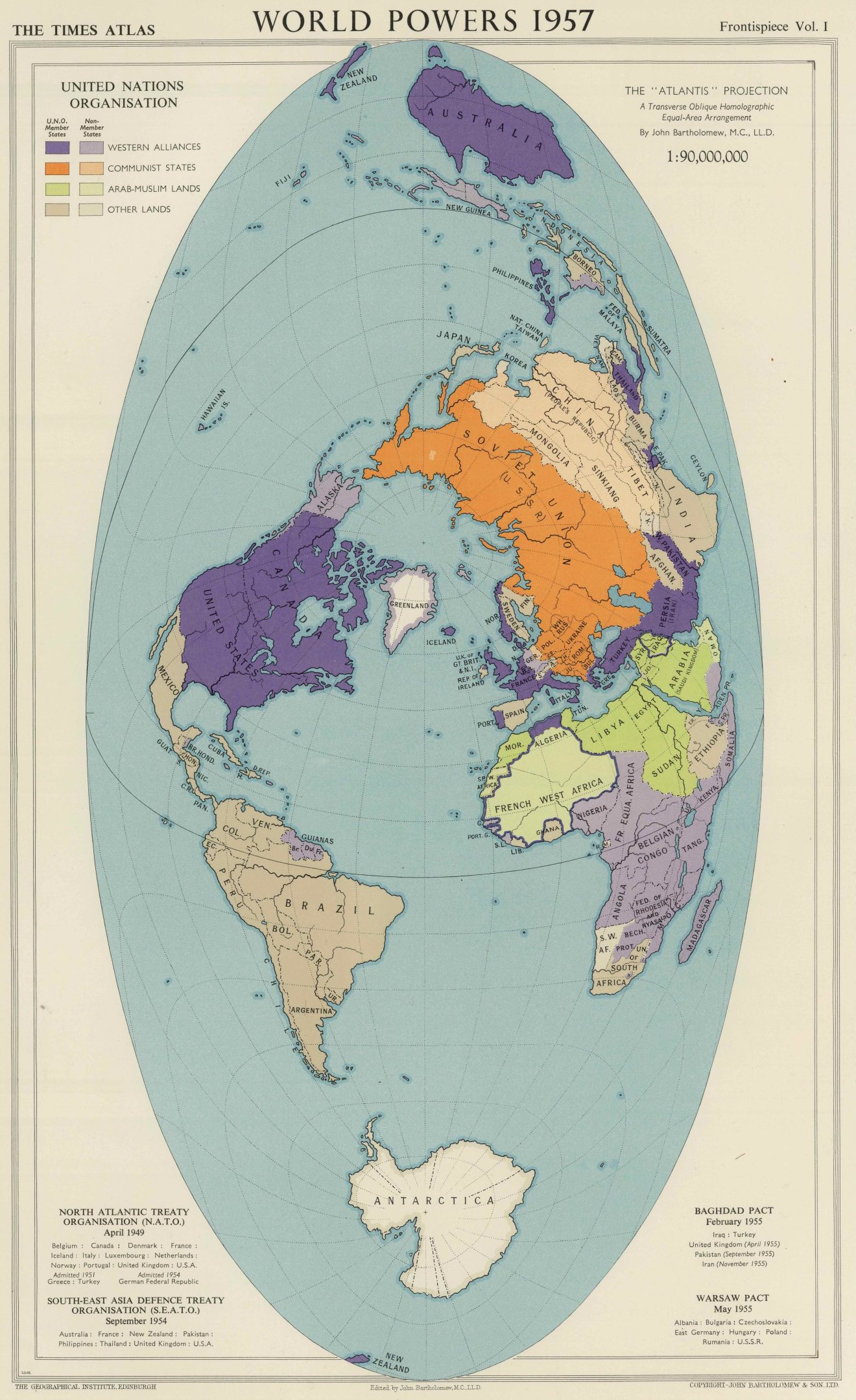
Nous parlons volontiers des deux mondes en présence, de leur guerre possible, de leur coexistence, etc., oubliant trop souvent qu’il en existe un troisième, le plus important, et en somme, le premier dans la chronologie. C’est l’ensemble de ceux que l’on appelle, en style Nations Unies, les pays sous-développés…Ce qui importe à chacun des deux mondes, c’est de conquérir le troisième ou du moins de l’avoir de son côté. Et de là viennent tous les troubles de la coexistence.
[We readily discuss the two worlds at play, their potential conflict, their coexistence, and so on, too often forgetting that there is a third world, the most important one, and in fact, the first in chronological order. This is the group of countries that are referred to, in United Nations terminology, as the developing countries…What matters to each of the two worlds is to conquer the third, or at least to have it on its side. And that is where all the troubles of coexistence stem from.]
Alfred Sauvy, TROIS MONDES, UNE PLANÈTE
BIBLIOGRAPHY
- Bartholomew, John. World Powers 1957. The Times Atlas of the World, 1957.
- Sauvy, Alfred. Trois mondes, une planète. Vingtième Siècle, revue d’histoire, no. 12, 1986, pp. 81–83.
- Pletsch, Carl E. “The Three Worlds, or the Division of Social Scientific Labor, Circa 1950-1975.” Comparative Studies in Society and History, vol. 23, no. 4, 1981, pp. 565–90.
- In 1952, in an article entitled “Three Worlds, One Planet,” Sauvy wrote that “we speak readily of two worlds in confrontation, of their possible war, of their coexistence, etc., forgetting all too often that there is a third-the most important and, in fact, the first world in the chronological sense.” He suggested that the third world was the very raison d’etre of the Cold War. “What interests each of the two [developed] worlds, is to conquer the third, or at least to have it on its side. And from that proceed all the troubles of coexistence.” Without explaining precisely why both were interested in having the countries of the third world on their side, he suggested that the two opposing blocs of communist and capitalist countries needed each other. For all their ideological differences, they had a great deal in common. They had the same interest in military power and only minimal interest in the real problems of the third world (Pletsch 569).
- But, he [Sauvy] also noted, he had to use it [the term “underdevelopment“] because it was the current expression. The same thing was true, oddly enough, of the expression “third world” that he invented or helped invent: Since it expressed the current prejudices of the natives of Western civilization, it had to be invented and used. But what preposterous simplification is entailed. Not even the Christian missionaries of the sixteenth and seventeenth centuries were so naive as to lump together the masters of the Inca empire and the tribes of hunters and gatherers. The distinction between traditional and modern that has generated the third world is hardly more sophisticated than the nineteenth century distinction between the civilized and uncivilized worlds, or the Chinese view of themselves as occupying the “middle kingdom” (Pletsch 575).
- Du Bois, W. E. B. Darkwater: Voices from Within the Veil. Harcourt, Brace and Company, 1920.
- Let me say this again and emphasize it and leave no room for mistaken meaning: The World War was primarily the jealous and avaricious struggle for the largest share in exploiting darker races. As such it is and must be but the prelude to the armed and indignant protest of these despised and raped peoples. Today Japan is hammering on the door of justice, China is raising her half -manacled hands to knock next, India is writhing for the freedom to knock, Egypt is sullenly muttering, the Negroes of South and West Africa, of the West Indies, and of the United States arc just awakening to their shameful slavery. Is, then, this war the end of wars? Can it be the end, so long as sits enthroned, even in the souls of those who cry peace, the despising and robbing of darker peoples? If Europe hugs this delusion, then this is not the end of world war, — it is but the beginning (Du Bois 49-50)!